
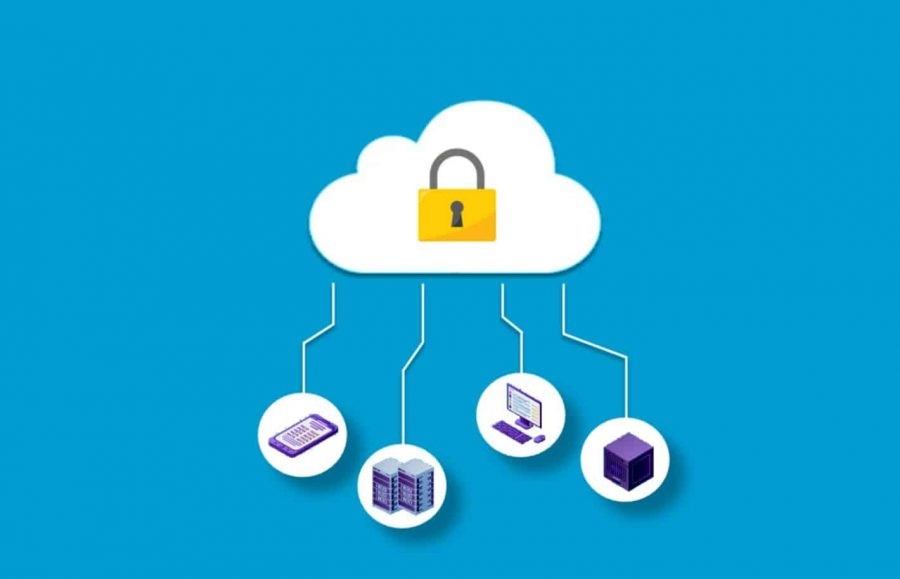
Cloud migration is considered to be one of the priorities of businesses today. So, you cannot afford to neglect the benefits that can be achieved through the public cloud while making sure to dodge every possible risk and cost that comes with it. Therefore, this brings attention to the significance of infrastructure consistency and how the cloud migration strategy impacts the networking, storage, and security of the workloads that you are moving.
Migration is an essential task that must be performed; by migrating the applications into infrastructure in the cloud with where your requests currently run, you can pace up the time to value and try to mitigate the risks related to the infrastructure modifications. It is essential to understand and consider for your business, especially for complex applications that need refactoring to run in the public cloud.
When the new set of infrastructure services is moved to the public cloud, you already lose your networking, storage configuration, and security. It leads to a slower and less effective, and more efficient migration. It automatically points to having the same existing infrastructure for your applications between the on-premises and the public cloud, providing you with the fastest, most cost-effective, and with the lowest risk path.
You must understand that with continuous and consistent infrastructure, you can define security, storage, and networking policies that stay the same when you move your applications between different environments from the existing private cloud to the new public clouds or edge locations. These policies, thus, are tied to the workload, so you can quickly shift them to any place as wished numerous times without losing this consistency you have maintained.
This article will examine the benefits and challenges faced in maintaining these networking, storage, and security policies and configurations while shifting your applications. These components affect and impact the cloud migration strategy in a digital transformation agency.
Before moving to other key points, we must look at the challenges first that are encountered by migrating applications into a new infrastructure service.
The Struggles of Migrating Applications
Networking
When businesses refactor for their public cloud, essential elements of networking are being bought and maintained separately, with changes and modifications kept in a place that is demanded to your routing, DNS, and IP addresses. When businesses use multiple public cloud providers, the complexity involving various tooling according to the cloud increases.
You need to understand that the time and investments you have already devoted to the existing network cannot be carried with it during the migrating process in a digital transformation agency.
Security
As we know, security comes with various individual struggles and challenges, and the process of refactoring and configuring the protection you have established can be lost or altered. When it is a public cloud, you need to buy security products, demonstrate your abilities to show regulatory compliance, and rebuild firewall rules and protocols with the new set of tools and infrastructures.
Storage
When the storage is considered, as you refactor the applications, you have the high risk of losing the existing storage policies, which can be accessed for performance and availability, and when required to rebuild them in the new public cloud where you are shifting your data.
It is how the cloud migration affects networking, storage, and security in a negative way which highly disbalances the whole business if not handled properly.
Cloud migration highly impacts a digital transformation agency’s networking, storage, and security. We have already learned about the cloud migration strategy’s challenges and negative impacts on these essential IT sector components. Let us now move to the benefits that could be driven by cloud migration in the networking, security, and storage of the company.
Networking
With the help of the cloud migration strategy, you can easily extend your network from the on-premises to the public cloud with complete visibility towards the L2 and L3 networking functionality and the perk of micro-segmentation. The application draws can keep the policies of networking, so you do not have to rewrite again for the new public cloud or buy new components.
Security
When it comes to the security of the data, keeping the infrastructure layer consistent helps you to maintain the security that has already been registered in your applications. It also makes sure the compliance VMware supports the software it has been using. It enables eliminating the hurdles of running the applications in the cloud. You can monitor and protect all the traffic in the public cloud with the help of a cloud migration strategy in a digital transformation strategy.
Storage
You can easily maintain the storage policy of your applications by using the already existing tools to make a prediction on performance, scalability, and efficiency. You do not need to convert VM storage to public cloud storage. At the same time, you have the advantage of accessing immediately the cloud-based disaster recovery, which is pre-integrated with the VMware cloud.
 Evaluation Tech