
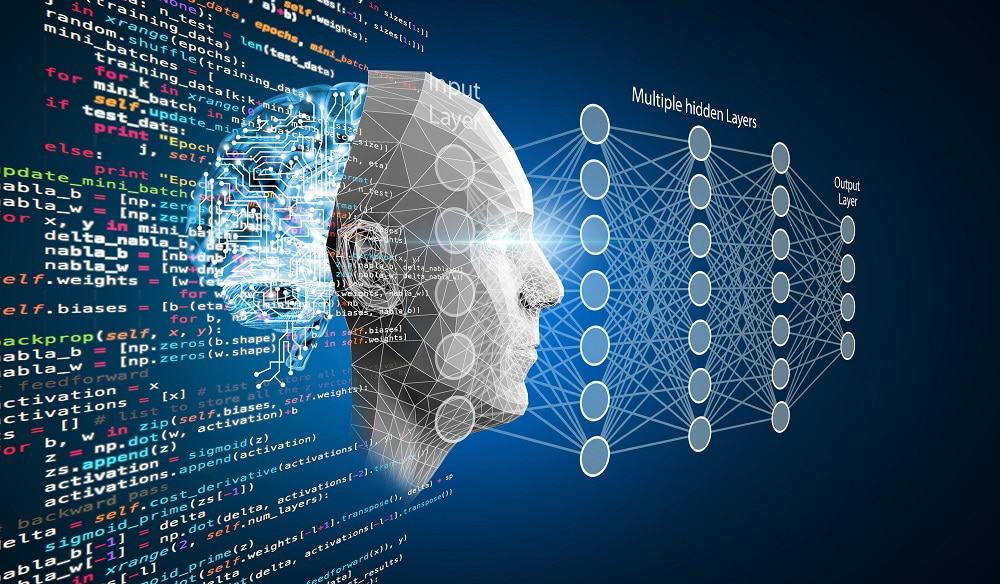
In the realm of machine intelligence, imagine teaching a pianist to perform without ever giving sheet music. Instead, you reward the player whenever the melody sounds harmonious and adjust the feedback when it falters. Over time, the pianist internalises the rhythm, dynamics, and flow achieving mastery through experience. This is how reinforcement learning (RL) works, and the Deep Deterministic Policy Gradient (DDPG) algorithm takes this artistry to an entirely new level. It’s not just about playing the right notes it’s about continuous refinement in infinite spaces of possibilities.
The Need for Precision in Continuous Worlds
Traditional reinforcement learning algorithms often deal with discrete actions a car can go left, right, or straight; a robot can pick up or drop an object. But what about tasks that demand finer control, like steering a self-driving car around a curve or adjusting a drone’s altitude with millimetre precision? These challenges exist in continuous action spaces, where the number of possible actions is infinite.
The DDPG algorithm was introduced to solve this exact problem. By combining the strengths of two fundamental approaches Q-learning and policy gradients it allows agents to make decisions with precision and fluidity. Much like an orchestra conductor managing dozens of instruments simultaneously, DDPG coordinates learning through harmony between its two primary components: the actor and the critic.
This balance between exploration and exploitation, creativity and discipline, reflects the same blend of art and logic that defines advanced learning paths in a Data Science course in Delhi, where theoretical understanding meets practical experimentation to produce adaptive, real-world problem solvers.
Inside the Actor-Critic Symphony
At its core, DDPG uses a dual-network design inspired by the actor-critic framework. The actor learns to select actions think of it as a strategist deciding what move to make next. The critic, on the other hand, evaluates the quality of that move, providing feedback based on a learned value function.
But what makes DDPG stand out is its use of deep neural networks to approximate these functions, enabling it to tackle complex, high-dimensional environments that were once too computationally demanding. This dynamic duo operates under the hood like a well-trained driving instructor the actor learns to steer smoothly, while the critic points out when the car veers off course.
The training process involves replaying past experiences from a memory buffer, ensuring the agent doesn’t overfit to recent events. Additionally, DDPG employs target networks to stabilise learning much like using a reference melody when tuning an instrument to prevent feedback loops from spiralling out of control.
The Elegance of Determinism
One of the most distinctive aspects of DDPG lies in its deterministic policy. In simpler terms, for a given state, the actor produces a specific action rather than a distribution of possible actions. This directness allows for faster convergence and more predictable control crucial in tasks requiring precise motor actions, such as robotic manipulation or autonomous flight.
However, a deterministic approach comes with its own challenge: the risk of overconfidence. To maintain a healthy dose of exploration, DDPG introduces noise during training often via the Ornstein-Uhlenbeck process. This carefully controlled randomness helps the model avoid getting stuck in suboptimal routines, allowing it to explore new strategies just as a curious student would during a Data Science course in Delhi, experimenting with different algorithms before settling on what works best.
DDPG in Real-World Scenarios
The beauty of DDPG lies in its practicality. From robotics and industrial automation to finance and energy systems, its influence spans multiple domains. In robotics, it empowers mechanical arms to grasp objects of varying shapes without explicit instructions. In autonomous vehicles, it helps balance acceleration, braking, and steering simultaneously. In financial trading, it can dynamically adjust portfolios based on continuous feedback from the market.
These applications highlight DDPG’s defining trait adaptability. It thrives in environments where decisions are not binary but exist on a fluid spectrum. This mirrors how modern professionals learn to navigate dynamic career landscapes, where structured education merges with constant experimentation and adaptation a mindset central to mastering emerging disciplines like artificial intelligence and machine learning.
Challenges and Evolving Successors
Despite its sophistication, DDPG is not without limitations. Its sensitivity to hyperparameters and vulnerability to overestimation bias can sometimes make the model unstable. Moreover, being off-policy (relying on replayed experiences) means that fine-tuning its exploration strategies is vital.
To overcome these issues, advanced variants such as Twin Delayed DDPG (TD3) and Soft Actor-Critic (SAC) were introduced, bringing greater robustness and performance improvements. TD3 addresses the overestimation problem by introducing twin critics, while SAC infuses entropy maximisation to encourage broader exploration. Together, they build upon the foundation that DDPG laid making reinforcement learning not just a research curiosity but a practical engineering tool.
A Glimpse into the Future
As deep reinforcement learning continues to evolve, DDPG remains a cornerstone in continuous control. It bridges the conceptual gap between neural networks and dynamic decision-making, transforming abstract equations into physical motion and intelligent behaviour. The elegance of this algorithm lies in its dual nature deterministic yet adaptive, calculated yet exploratory.
In essence, DDPG symbolises the pursuit of mastery through balance a dance between stability and creativity. Much like learners who refine their analytical thinking and intuition during a Data Science course in Delhi, DDPG constantly tunes its parameters, learns from its mistakes, and moves closer to perfection with every iteration.
Conclusion
The Deep Deterministic Policy Gradient algorithm represents more than a mathematical innovation it’s a philosophical statement about how intelligence can emerge from experience. It teaches us that mastery isn’t about choosing from fixed options but about learning to operate seamlessly within infinite possibilities. Through its elegant blend of neural networks and reinforcement principles, DDPG reminds us that the path to precision often begins with exploration and that the art of learning lies not in knowing all answers, but in continuously discovering better ones.
 Evaluation Tech