
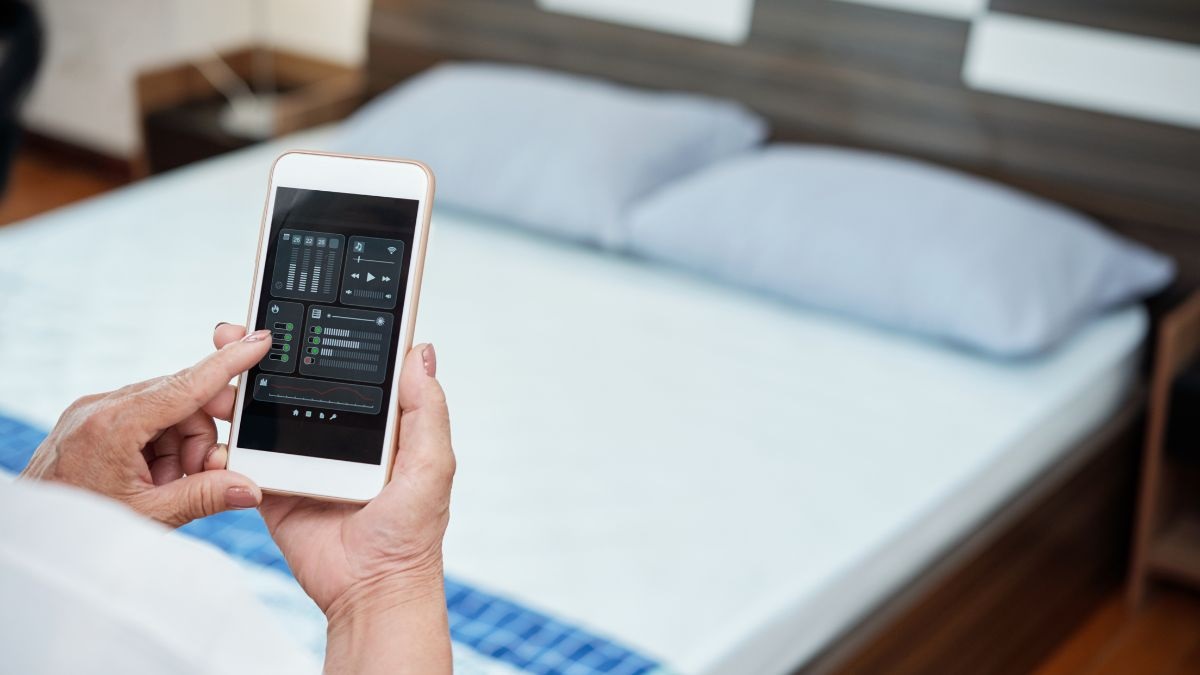
A smart bed is one in which several sensors and other technology are built into the mattress to track the sleep patterns of the user. The bed analyses the data and makes automatic modifications to maximise the quality of your rest. In addition, it sends information about your sleep to your phone so that you may access statistics about your sleep and tips on how to improve it.
What precisely does the term “smart bed” refer to?
If you’re trying to describe what a smart bed is, there’s one example that stands out as being very useful: When you lay down on a Casper mattress, an accompanying app tracks your every move to learn which sleeping positions you love and which you don’t. The mattress then adapts in real time to your changing preferences.
In other words, a smart bed can identify your sleeping patterns and save them for analysis. It evaluates the frequency and quality of your sleep cycles. In certain cases, it will provide you the data and responses you need without you having to ask for them. The smart beds may be able to detect your sleeping position and adjust their features accordingly.
The Science Behind the Smart Bed’s Technology
Smart mattresses, in contrast to conventional beds, are equipped with cutting-edge hardware that might dramatically improve not only our rest but also our daily routines.
Smart mattresses have the potential to track your sleeping patterns and provide suggestions to enhance your slumber. It also has the potential to do tasks that help you get a better night’s rest. In addition, additional smart home equipment, such as smart lighting, may be linked to allow for remote on/off control from anywhere in the house.
There is a wide variety of “smart” beds on the market, but there is no universally applicable set of characteristics for these beds. Technology has progressed to the point that even routine tasks like shifting furniture in your bedroom or switching on your air conditioner or heater can be performed with no effort, thanks to the widespread availability of Wi-Fi connections and the Internet of Things (IoT).
Smart beds can not only track your sleep habits and give you with insights into those habits, but they can also supply you with sleep-optimization strategies to help you get a better night’s rest.
Keeping Tabs on Your Zzz’s
A smart mattress keeps track of your activity while you sleep, which is one of the main distinctions between it and a traditional mattress. This is only one example of the many distinctions between the two mattress kinds. Using either a single sheet of “smart fabric” or several sensors placed throughout the mattress, the mattress is able to track a variety of data, including a heartbeat, respiration, sleep quality, and pressure, to determine what is necessary to give you the best night’s sleep possible. This gives the mattress a chance to learn how to best accommodate your needs while you sleep.
Modifying the Temperature
Thermostats built into certain contemporary mattresses let you regulate the temperature of your sleeping surface, or even your whole bed if it’s set to do so automatically. Smart beds reduce the need for extra furniture by eliminating the need to stack bedding.
 Evaluation Tech