
Deleting files and reformatting a drive feels like enough to most people offloading an old computer, without realising that standard deletion leaves recoverable data behind for anyone with basic recovery software and a few minutes of patience. A hard drive destruction service becomes necessary well before most businesses actually think to arrange one, and knowing the specific triggers helps avoid a costly gap between equipment retirement and genuine data security, rather than discovering the gap only after something has already gone wrong.
Why Deleting Files Isn’t Actually Destruction
Deleting a file or reformatting a drive removes the pointer to the data, not the data itself, which remains physically present on the disk until overwritten by new information written on top of it. Recovery tools can reconstruct much of this content with modest effort and freely available software, which is why deletion alone is not a defensible standard for any drive that ever held sensitive customer, financial or employee information.
Compliance Triggers That Require Physical Destruction
Certain data protection obligations effectively require destruction rather than mere deletion once a drive holding regulated information reaches end of life, since a regulator assessing a breach will ask specifically what disposal method was used and when. Businesses handling personal data, health records or financial information face this trigger more often than they initially expect, sometimes without realising a specific piece of equipment even fell under that obligation.
End-of-Lease and Equipment Refresh Cycles
A hardware refresh or the end of a leasing agreement is one of the most common points at which a batch of drives suddenly needs handling all at once, often on a deadline set by the leasing company rather than the business itself. Planning destruction into this cycle in advance avoids a rushed, poorly documented disposal under deadline pressure, which is exactly the situation most likely to produce a gap in the paper trail later.
Data Breach Risk From Retired Drives
A drive sitting in a storeroom after replacement is not a neutral, inactive object; it remains a live data security risk for as long as it exists intact, since it can be lost, stolen, or simply forgotten and sold without proper handling months or years later. The risk does not diminish with time the way many assume; if anything, an unlabelled old drive becomes easier to lose track of the longer it sits unaddressed.
When Software Wiping Is Genuinely Sufficient
A properly executed software wipe using a recognised standard can be adequate for lower-sensitivity data on a drive being resold or redeployed internally, though this differs meaningfully from the guarantee physical destruction provides for genuinely sensitive material. Comparing this against it asset recycling companies clarifies which approach actually suits a specific drive’s sensitivity level, rather than defaulting to whichever method happens to be cheaper or more convenient at the time.
Industries With Stricter Destruction Requirements
Healthcare, finance, legal and government-adjacent sectors typically carry stricter expectations around provable destruction than a general retail or hospitality business, since the underlying data these industries handle is inherently more sensitive and more heavily regulated by law. A business operating in one of these sectors should treat destruction as a baseline requirement rather than an optional upgrade over standard disposal.
What Happens During Physical Destruction
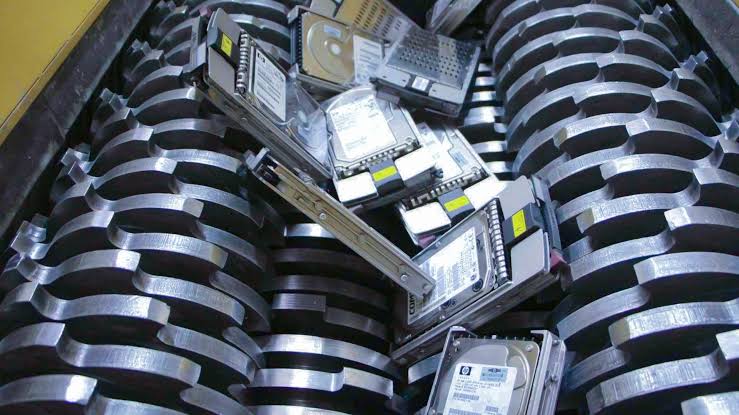
Physical destruction typically involves shredding, crushing or degaussing a drive to the point where data recovery becomes practically impossible even for a determined and well-resourced attacker, a process that should be witnessed or documented on video where the sensitivity of the data justifies that level of assurance. Asking to observe this process, rather than simply trusting a provider’s word, is a reasonable request for any business handling genuinely sensitive material.
Getting a Certificate of Destruction
A proper certificate of destruction records the specific serial numbers destroyed, the method used, and the date, giving a business a defensible paper trail if a regulator or client ever asks how retired equipment was actually handled months or years after the fact. A certificate lacking this specific detail is closer to a generic receipt than genuine proof of what actually happened to each individual drive.
Choosing Between On-Site and Off-Site Destruction
On-site destruction lets a business witness the process directly without drives ever leaving the premises, while off-site destruction is often more cost-effective for larger volumes provided the transport chain is properly secured and documented from collection through to the final destruction step. Weighing this against certified it asset disposition itad solutions helps determine which option actually suits a specific volume and sensitivity level, rather than assuming one approach is automatically better regardless of the situation.
Deciding If Your Business Needs This Now
A business retiring even a handful of drives that ever touched customer, financial or employee data has already crossed the point where a proper destruction service is worth arranging, rather than waiting for a larger refresh cycle or an actual incident to force the decision. Acting on this earlier, while it still feels like a precaution rather than a necessity, is what actually keeps the decision a genuine choice rather than damage control after the fact.

